Cortexia collecte des images du sol à vélo pour améliorer la détection automatique des déchets urbains. Cette page présente les mesures juridiques et techniques garantissant votre vie privée.
Cortexia erfasst per Fahrrad Bodenbilder zur Verbesserung der automatischen Erkennung von Straßenabfällen. Diese Seite erläutert die rechtlichen und technischen Maßnahmen zum Schutz Ihrer Privatsphäre.
Cortexia raccoglie in bicicletta immagini del suolo per migliorare il rilevamento automatico dei rifiuti urbani. Questa pagina illustra le misure giuridiche e tecniche a tutela della privacy.
Cortexia zbiera rowerem obrazy podłoża w celu doskonalenia automatycznego wykrywania odpadów miejskich. Ta strona opisuje środki prawne i techniczne chroniące Twoją prywatność.
Cortexia samlar med cykel markbilder för att förbättra automatisk detektering av stadsskräp. Denna sida presenterar de rättsliga och tekniska åtgärderna för att skydda din integritet.
Cortexia collects ground-level images by bicycle to improve the automatic detection of urban litter. This page presents the legal and technical measures protecting your privacy.
Oui. Le dispositif Cortexia ne constitue pas un système de vidéoprotection soumis à autorisation administrative. Il relève exclusivement du RGPD, dont les conditions sont remplies.
Le régime de vidéoprotection du Code de la sécurité intérieure (CSI, art. L251-1 à L255-1) vise les systèmes fixes de surveillance de la voie publique à fins sécuritaires, mis en œuvre par des autorités publiques. Notre dispositif est fondamentalement différent : caméra mobile sur un vélo en mouvement, finalité statistique et de recherche, captation de données personnelles accidentelle et automatiquement anonymisée sous 5 jours.
Le cabinet Klein·Wenner a spécifiquement conclu dès 2020 que notre activité n'entre pas dans le champ du CSI. La CNIL elle-même reconnaît que les dispositifs à finalité statistique (ex. comptage de vélos sur la voie publique) sont possibles sans cadre législatif spécifique, sous réserve du respect du RGPD. L'AIPD réalisée par Klein·Wenner satisfait à cette exigence.
Ja. Das Cortexia-Gerät ist kein Videoüberwachungssystem, das einer behördlichen Genehmigung bedarf. Ausschließlich die DSGVO gilt, deren Anforderungen erfüllt sind.
§4 BDSG regelt die Videoüberwachung öffentlich zugänglicher Räume. Das Bundesverwaltungsgericht (BVerwG) hat jedoch am 27. März 2019 entschieden, dass §4 BDSG ausschließlich auf öffentliche Stellen anwendbar ist. Für private Unternehmen wie Cortexia gilt allein Art. 6.1(f) DSGVO. Darüber hinaus erlaubt §27 BDSG ausdrücklich die Datenverarbeitung zu wissenschaftlichen und statistischen Zwecken — genau der Zweck dieses Projekts.
Für Cortexia als privates Unternehmen gilt §4 BDSG nicht. Art. 6.1(f) DSGVO und §27 BDSG bilden unsere vollständige Rechtsgrundlage. Die Informationspflicht (Beschilderung an den Fahrrädern) ist gemäß §4 Abs. 2 BDSG erfüllt. Es sind weder eine Antragsstellung noch eine Voranmeldung bei einer Behörde erforderlich.
Sì. Il dispositivo Cortexia non costituisce un sistema di videosorveglianza soggetto ad autorizzazione amministrativa. Si applica esclusivamente il GDPR, i cui requisiti sono soddisfatti.
Il Codice della Privacy italiano (D.Lgs. 196/2003, modificato dal D.Lgs. 101/2018 per adeguamento al GDPR) non prevede un regime di autorizzazione preventiva del Garante Privacy per le telecamere mobili utilizzate a fini di ricerca statistica. Il dispositivo Cortexia è fondamentalmente diverso da un impianto di videosorveglianza fisso: telecamera mobile su bicicletta, finalità statistica e di ricerca, dati personali catturati accidentalmente e automaticamente anonimizzati entro 5 giorni.
Il Garante Privacy non richiede autorizzazione preventiva per i trattamenti statistici effettuati da soggetti privati con telecamere mobili. Il GDPR (Art. 6.1(f) e Art. 89) è l'unico quadro normativo applicabile alla nostra attività. La nostra DPIA effettuata da Klein·Wenner costituisce la garanzia richiesta. L'obbligo di informazione (segnaletica visibile sulle biciclette) è soddisfatto.
Tak. Urządzenie Cortexia nie stanowi systemu monitoringu wizyjnego wymagającego zezwolenia administracyjnego. Stosuje się wyłącznie RODO, którego wymagania są spełnione.
Polska ustawa o ochronie danych osobowych z dnia 10 maja 2018 r. wdraża RODO w prawie krajowym. Nie przewiduje ona zezwolenia UODO (Urząd Ochrony Danych Osobowych) dla przetwarzań statystycznych za pomocą mobilnych kamer. Zezwolenie organu nadzorczego wymagane jest wyłącznie w przypadkach expressément przewidzianych przez RODO. Nasze urządzenie jest zasadniczo odmienne od stacjonarnego systemu monitoringu: mobilna kamera na rowerze, cele statystyczne i badawcze, przypadkowe zbieranie danych osobowych automatycznie anonimizowanych w ciągu 5 dni.
Art. 89 RODO jest w pełni wdrożony w polskim prawie i stanowi wystarczającą podstawę dla naszego przetwarzania danych do celów statystycznych. OCPD przeprowadzona przez Klein·Wenner oraz dokumentacja rejestru czynności przetwarzania spełniają wymagania UODO. Obowiązek informacyjny (widoczne oznakowanie na rowerach) jest spełniony.
Ja. Cortexias utrustning utgör inte ett kameraövervakningssystem som kräver administrativt tillstånd. Enbart GDPR tillämpas, vars krav är uppfyllda.
Den svenska Kamerabevakningslagen (2018:1200) har genomgått en betydande reform som trädde i kraft den 1 april 2025: tillståndskravet från Integritetsskyddsmyndigheten (IMY) har avskaffats för de flesta verksamheter. För en privat aktör med statistiska syften räcker det nu med en dokumenterad intresseavvägning — som redan täcks av vår DPIA och Art. 89 GDPR. Vår utrustning är dessutom fundamentalt annorlunda än ett fast övervakningssystem: mobil kamera på en cykel, statistiska och forskningsmässiga syften, oavsiktlig insamling av personuppgifter som automatiskt anonymiseras inom 5 dagar.
Tillståndskravet är avskaffat. En dokumenterad intresseavvägning är tillräcklig och täcks av vår DPIA. IMY erkänner uttryckligen statistiska ändamål som giltig grund för kameraanvändning. Informationskravet (skyltning på cyklarna) och dokumentationen av intresseavvägningen uppfyller kraven i svensk lag. Ingen anmälan till IMY krävs.
Yes. The Cortexia device does not constitute a video surveillance system requiring prior administrative authorisation. The GDPR alone applies, and its requirements are met.
The central argument is the same in all countries: national authorisation regimes for cameras in public spaces target fixed surveillance systems for security purposes. Our device is fundamentally different: a mobile camera on a moving bicycle, statistical and research purposes, accidental capture of personal data that is automatically anonymised within 5 days.
Klein·Wenner concluded in both 2020 and 2025 that the Cortexia device does not fall within the scope of the CSI (Internal Security Code), which governs fixed video surveillance for security purposes. The GDPR alone applies. The CNIL itself acknowledges that devices used for statistical purposes (e.g. counting cyclists) are possible without specific legislation, provided GDPR is respected.
Following the Federal Administrative Court (BVerwG) ruling of 27 March 2019, §4 BDSG (video surveillance of publicly accessible spaces) applies only to public bodies. For private companies such as Cortexia, Art. 6.1(f) GDPR alone governs. §27 BDSG explicitly permits processing for scientific research and statistical purposes.
The information obligation (signage on bicycles) is met in accordance with §4(2) BDSG. No prior filing or administrative authorisation is required.
The Codice della Privacy (D.Lgs. 196/2003, as amended by D.Lgs. 101/2018 to align with the GDPR) does not require prior authorisation from the Garante Privacy for mobile cameras used for statistical research. The GDPR is the sole applicable framework.
The Garante Privacy does not require prior authorisation for statistical processing. The DPIA conducted constitutes the required safeguard. Information obligations (signage on bicycles) are met.
The Polish Data Protection Act (10 May 2018) implementing the GDPR does not provide for prior authorisation from the UODO (Office for Personal Data Protection) for statistical processing using mobile cameras. UODO authorisation is only required in cases expressly stipulated by the GDPR itself. Art. 89 GDPR is fully transposed in Polish law.
The DPIA conducted by Klein·Wenner and the record of processing activities meet the requirements of the Polish supervisory authority.
The reformed Kamerabevakningslagen (Camera Surveillance Act, 2018:1200, amended 1 April 2025) has eliminated the IMY permit requirement for most entities. For a private entity with a statistical purpose, a documented intresseavvägning (balancing of interests) is sufficient — already covered by our DPIA and Art. 89 GDPR. The IMY explicitly recognises statistical purposes as a valid ground.
The information obligation (signage on bicycles) and the documentation of the intresseavvägning meet the requirements of Swedish law. No filing with the IMY is required.
Cortexia SA développe des systèmes d'intelligence artificielle pour la mesure de la propreté urbaine. Ce projet de recherche & développement vise à constituer un jeu de données d'entraînement représentatif pour améliorer les modèles de détection de déchets.
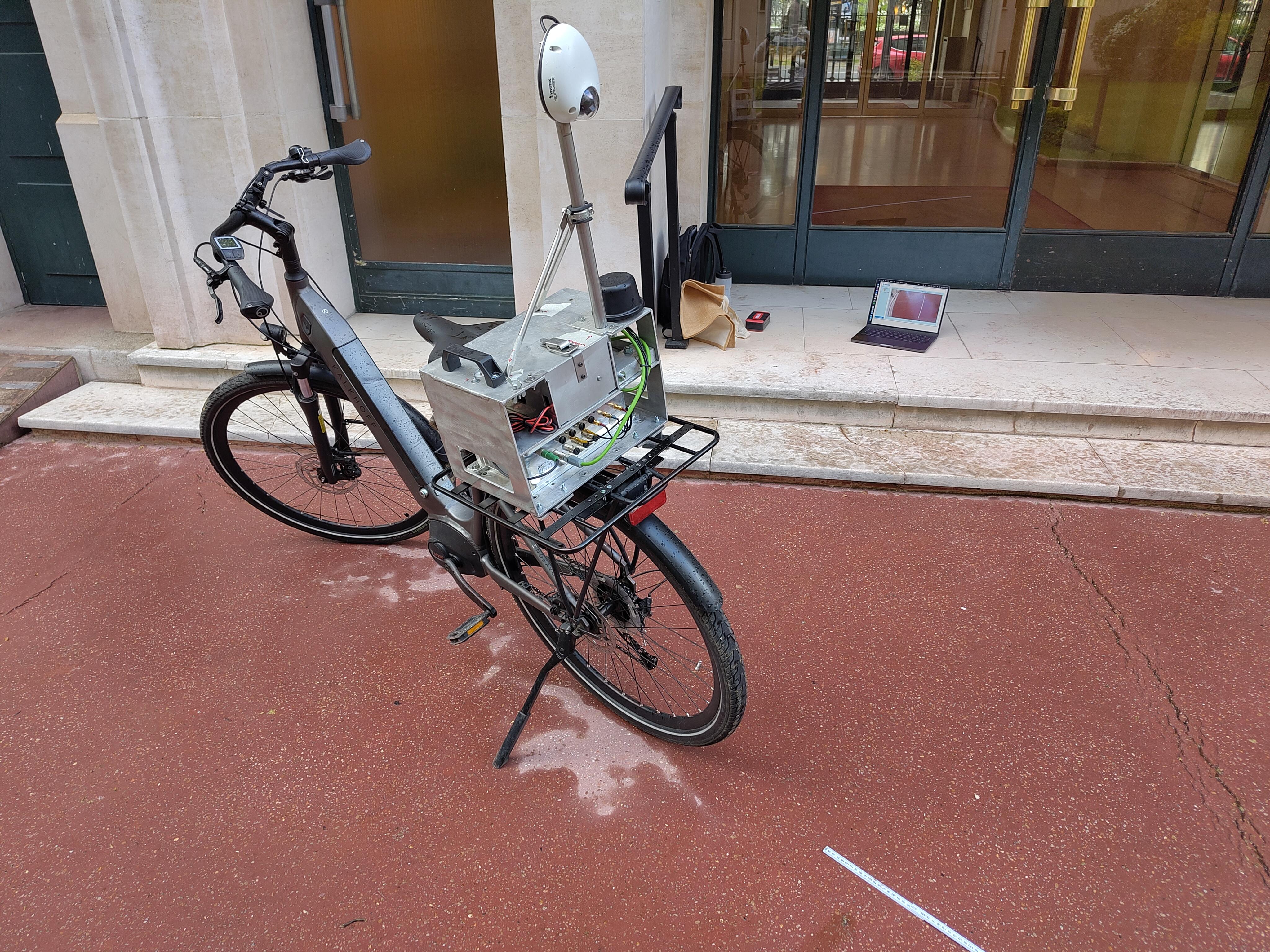
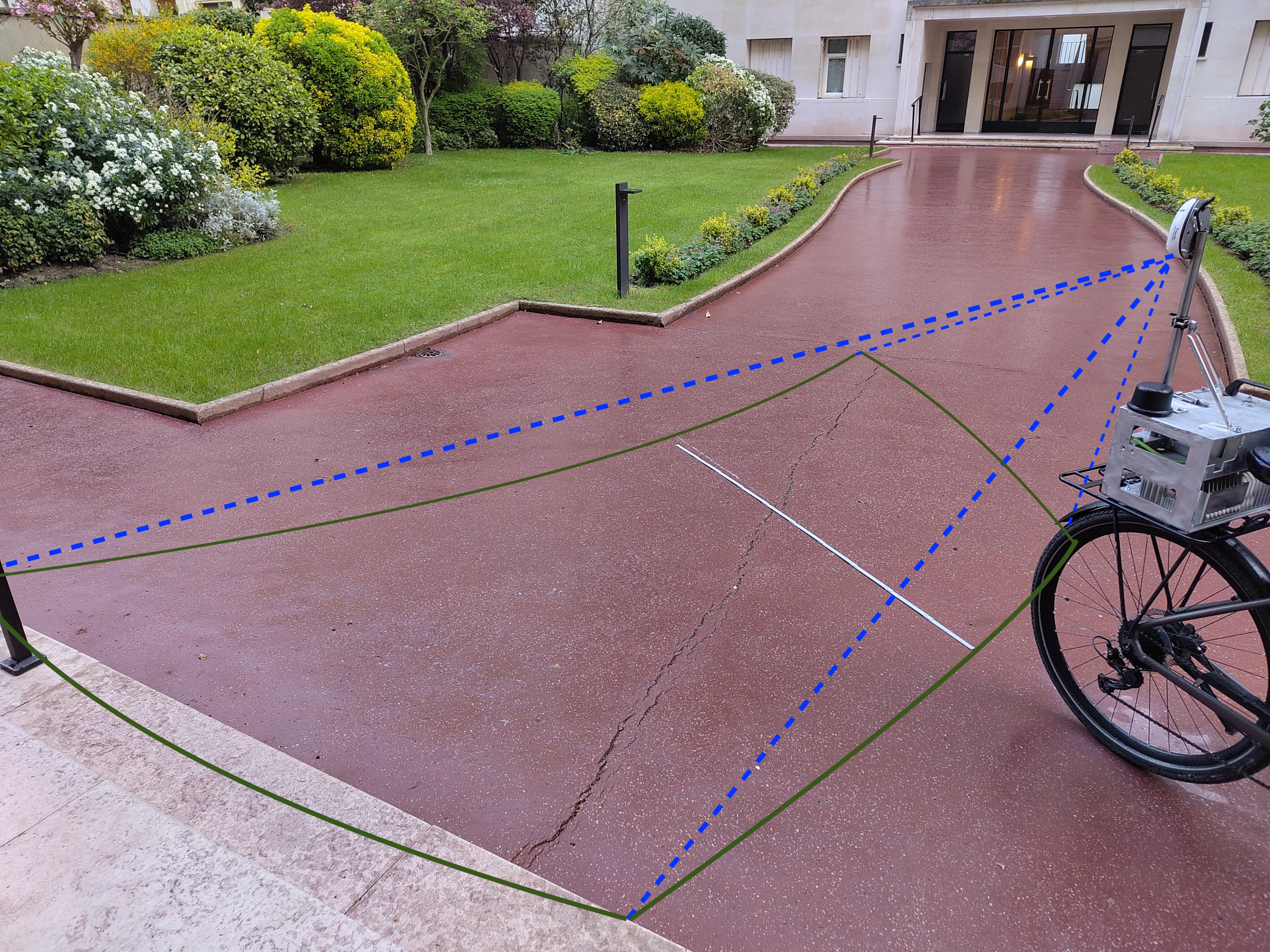
Un opérateur circule à vélo en ville. Une Cortexia-Box est fixée sur le porte-bagages. Une caméra plongeante y est attachée, orientée vers le sol, sous la hauteur d'épaule. Le logiciel embarqué capture les images pour produire des données d'entraînement. La collecte se déroule sur 7 jours, avec des itinéraires couvrant différents quartiers et horaires pour garantir la représentativité statistique. Aucune personne n'est intentionnellement filmée.
Cortexia SA entwickelt KI-Systeme zur Messung der Stadtsauberkeit. Dieses F&E-Projekt zielt darauf ab, einen repräsentativen Trainingsdatensatz zur Verbesserung der Abfallerkennungsmodelle aufzubauen.
Ein Operator fährt mit dem Fahrrad durch die Stadt. Eine Cortexia-Box ist am Gepäckträger montiert. Eine Bodenkamera ist unterhalb der Schulterhöhe nach unten gerichtet. Die Software erfasst Bilder für Trainingsdaten. Die Datenerhebung dauert 7 Tage. Es werden keine Personen absichtlich gefilmt.


Cortexia SA sviluppa sistemi di intelligenza artificiale per la misurazione della pulizia urbana. Questo progetto R&S mira a costruire un dataset di addestramento rappresentativo per migliorare i modelli di rilevamento dei rifiuti.
Un operatore percorre la città in bicicletta. Una Cortexia-Box è montata sul portapacchi. Una telecamera è orientata verso il basso, sotto l'altezza delle spalle. La raccolta dura 7 giorni. Nessuna persona viene filmata intenzionalmente.


Cortexia SA opracowuje systemy sztucznej inteligencji do pomiaru czystości miejskiej. Ten projekt B+R ma na celu zbudowanie reprezentatywnego zbioru danych treningowych.
Operator jedzie rowerem po mieście. Cortexia-Box jest zamontowana na bagażniku. Kamera skierowana jest w dół, poniżej wysokości ramion. Zbiórka trwa 7 dni. Żadna osoba nie jest celowo filmowana.


Cortexia SA utvecklar AI-system för mätning av stadsrenlighet. Detta FoU-projekt syftar till att bygga ett representativt träningsdataset för att förbättra detekteringsmodeller.
En operatör cyklar genom staden. En Cortexia-Box är monterad på pakethållaren. En nedåtriktad kamera är fäst under axelhöjd. Insamlingen pågår 7 dagar. Inga personer filmas avsiktligt.


Cortexia SA develops AI systems for measuring urban cleanliness. This R&D project aims to build a representative training dataset to improve litter detection models.
An operator rides a bicycle through the city. A Cortexia-Box is mounted on the rear rack. A downward-facing camera is attached below shoulder height, aimed at the ground. On-board software captures images for training data. The collection runs for 7 days, covering different neighbourhoods and times of day to ensure statistical representativeness. No person is intentionally filmed.


Ce projet R&D a pour finalité la constitution d'un jeu de données d'entraînement permettant d'améliorer les algorithmes de détection de déchets de Cortexia. Le traitement relève de la finalité statistique au sens de l'article 89 du RGPD : il vise à produire des données agrégées et anonymisées sur la distribution des déchets urbains, sans prise de décision en temps réel affectant les personnes concernées.
Cette qualification est confirmée par l'analyse juridique du cabinet Klein·Wenner (juin 2025), qui précise que l'intervention sur les données personnelles (pieds, jambes, plaques) ne résulte pas du traitement de ces données en tant que telles, mais uniquement du traitement des images de déchets — qui ne sont pas des données à caractère personnel. En conséquence, le régime dérogatoire du droit d'opposition aux traitements statistiques est applicable (Art. 21 §6 RGPD).
Cortexia a un intérêt légitime à améliorer la précision et la fiabilité de ses systèmes de détection. Cet intérêt est réel, actuel et proportionné : sans données d'entraînement représentatives, les modèles d'IA produiraient des cartographies de propreté inexactes, nuisant à la valeur du service proposé aux collectivités. La mise en balance avec les droits des personnes concernées est favorable, en raison de l'impact très limité du traitement : captation accidentelle, données à caractère personnel non recherchées, anonymisation automatique sous 5 jours, aucune identification possible.
Note : cette base légale est distincte d'un intérêt public au sens de l'Art. 6.1(e) RGPD. Ce projet étant un projet interne de R&D de Cortexia, sans commande directe d'une collectivité, la base « intérêt public » n'est pas retenue.
La Suisse, siège de Cortexia SA, bénéficie d'une décision d'adéquation de la Commission européenne (Art. 45 RGPD). Les transferts de données vers Cortexia SA ne nécessitent aucune garantie supplémentaire.
Dieses F&E-Projekt dient der Erstellung eines Trainingsdatensatzes zur Verbesserung der KI-Algorithmen von Cortexia. Die Verarbeitung fällt unter die statistische Zweckbestimmung gemäß Art. 89 DSGVO: Sie zielt auf aggregierte, anonymisierte Daten über die Verteilung von Straßenabfällen ab, ohne Echtzeit-Entscheidungen, die betroffene Personen betreffen. Das Widerspruchsrecht kann nach Art. 21 §6 DSGVO eingeschränkt werden, wenn es die statistische Zweckbestimmung ernsthaft beeinträchtigen würde.
Cortexia hat ein berechtigtes Interesse daran, die Genauigkeit seiner Erkennungssysteme zu verbessern. Dieses Interesse ist real, aktuell und verhältnismäßig. Die Interessenabwägung fällt zugunsten von Cortexia aus, da die Auswirkungen auf die Privatsphäre sehr begrenzt sind: zufällige Erfassung, keine personenbezogenen Daten beabsichtigt, automatische Anonymisierung innerhalb von 5 Tagen.
Hinweis: Da es sich um ein internes F&E-Projekt von Cortexia handelt, ohne direkten Auftrag einer Gemeinde, wird die Grundlage „öffentliches Interesse" (Art. 6.1(e)) nicht herangezogen.
Die Schweiz verfügt über einen Angemessenheitsbeschluss der Europäischen Kommission (Art. 45 DSGVO).
Questo progetto R&S mira a costruire un dataset di addestramento per migliorare gli algoritmi di Cortexia. Il trattamento rientra nella finalità statistica ai sensi dell'Art. 89 GDPR: produce dati aggregati e anonimizzati sulla distribuzione dei rifiuti, senza decisioni in tempo reale che riguardino persone identificabili. Il diritto di opposizione può essere limitato ai sensi dell'Art. 21 §6 GDPR.
Cortexia ha un interesse legittimo a migliorare l'accuratezza dei propri sistemi. Questo interesse è reale, attuale e proporzionato. Il bilanciamento degli interessi è favorevole, date le conseguenze molto limitate per le persone: cattura accidentale, nessuna identificazione, anonimizzazione automatica entro 5 giorni.
Nota: trattandosi di un progetto R&S interno di Cortexia, senza commissione diretta da un ente pubblico, la base "interesse pubblico" (Art. 6.1(e)) non è applicabile.
La Svizzera beneficia di una decisione di adeguatezza della Commissione europea (Art. 45 GDPR).
Ten projekt B+R ma na celu zbudowanie zestawu danych treningowych. Przetwarzanie mieści się w celach statystycznych zgodnie z Art. 89 RODO: wytwarza zagregowane, zanonimizowane dane bez podejmowania decyzji w czasie rzeczywistym dotyczących osób. Prawo sprzeciwu może być ograniczone na podstawie Art. 21 §6 RODO.
Cortexia ma uzasadniony interes w poprawie dokładności swoich systemów wykrywania. Interes ten jest realny, aktualny i proporcjonalny. Test równoważenia jest korzystny ze względu na bardzo ograniczony wpływ na prywatność.
Uwaga: ponieważ jest to wewnętrzny projekt B+R Cortexia, bez bezpośredniego zamówienia od gminy, podstawa „interes publiczny" (Art. 6.1(e)) nie ma zastosowania.
Szwajcaria posiada decyzję stwierdzającą odpowiedni stopień ochrony Komisji Europejskiej (Art. 45 RODO).
Detta FoU-projekt syftar till att bygga ett träningsdataset. Behandlingen faller under statistiska ändamål enligt Art. 89 GDPR: den producerar aggregerade, anonymiserade data utan realtidsbeslut som påverkar identifierbara personer. Rätten att invända kan begränsas enligt Art. 21 §6 GDPR.
Cortexia har ett berättigat intresse av att förbättra sina detekteringssystems noggrannhet. Intresseavvägningen utfaller positivt tack vare den mycket begränsade integritetseffekten.
Obs: Eftersom detta är ett internt FoU-projekt hos Cortexia, utan direkt uppdrag från en kommun, tillämpas inte grunden "allmänt intresse" (Art. 6.1(e)).
Schweiz har ett adekvansebeslut från Europeiska kommissionen (Art. 45 GDPR).
This R&D project aims to build a training dataset to improve Cortexia's litter detection algorithms. The processing falls under statistical purposes as defined by Art. 89 GDPR: it produces aggregated, anonymised data on the distribution of urban litter, without real-time decisions affecting identifiable individuals. This qualification is confirmed by the Klein·Wenner legal analysis (June 2025), which notes that any incidental processing of personal data (feet, legs, licence plates) does not result from treating those personal elements as such — it results from processing litter images, which are not personal data. Accordingly, the derogation from the right to object for statistical processing applies (Art. 21 §6 GDPR).
Cortexia has a legitimate interest in improving the accuracy and reliability of its detection systems. This interest is real, current, and proportionate: without representative training data, AI models would produce inaccurate cleanliness maps, undermining the value of services offered to municipalities. The balancing test is favourable given the very limited impact of the processing: accidental capture, no intentional personal data collection, automatic anonymisation within 5 days, no possible identification.
Note: this legal basis is distinct from public interest under Art. 6.1(e) GDPR. As this is an internal R&D project by Cortexia, not directly commissioned by a public authority, the public-interest basis does not apply.
Switzerland, the registered seat of Cortexia SA, benefits from an adequacy decision by the European Commission (Art. 45 GDPR). No additional safeguards are required for transfers to Cortexia SA.
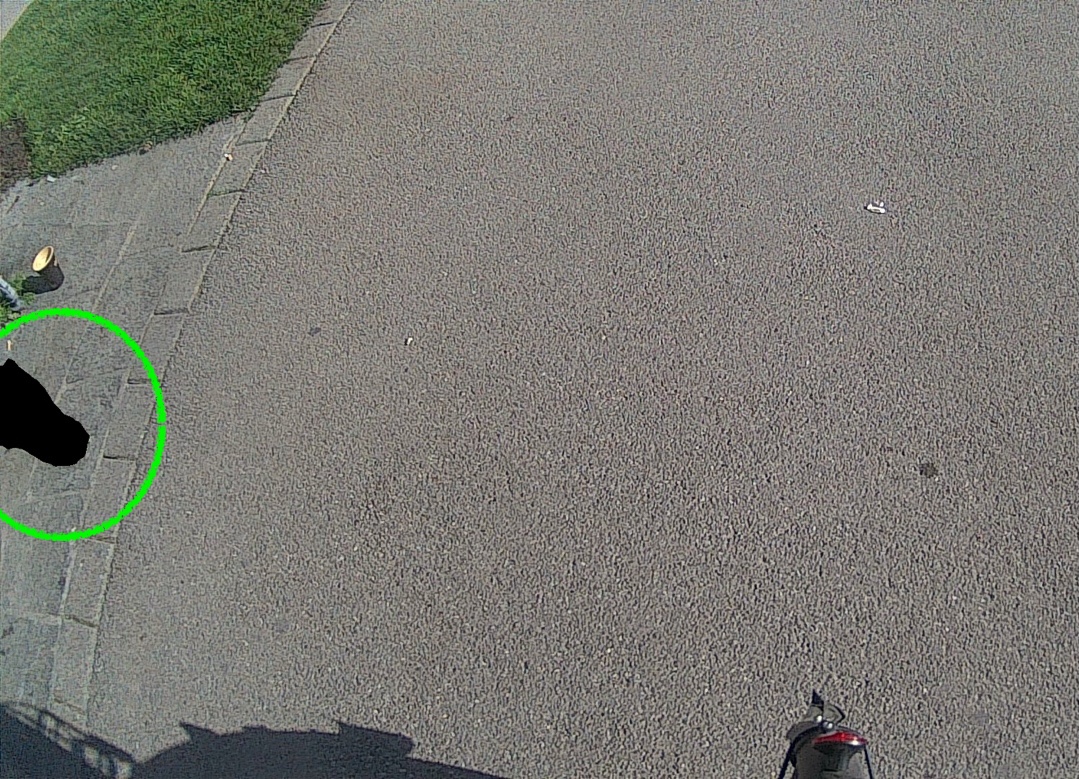
Les caméras capturent des images du sol. En raison de l'angle et de la hauteur de la caméra, des pieds, jambes ou plaques d'immatriculation peuvent apparaître accidentellement dans le champ. Ces données personnelles ne sont jamais recherchées. Elles sont transmises avec les images au stockage sécurisé, puis anonymisées automatiquement dans un délai maximum de 5 jours.
| Catégorie | Nature de la captation | Conservation | Statut |
|---|---|---|---|
| Pieds et jambes de passants | Accidentelle — champ ≤ 2 m au sol, sous la hauteur d'épaule | Anonymisation automatique ≤ 5 jours | Anonymisé |
| Plaques d'immatriculation | Accidentelle — proches du niveau du sol | Anonymisation automatique ≤ 5 jours | Anonymisé |
| Images de déchets (données de recherche) | Intentionnelle — finalité du projet | Conservées après anonymisation — hors champ RGPD | Non-personnel |
Kameras erfassen Bodenbilder. Aufgrund von Winkel und Höhe können Füße, Beine oder Kfz-Kennzeichen versehentlich erscheinen. Diese Daten werden nie bewusst gesucht und innerhalb von maximal 5 Tagen automatisch anonymisiert.
| Kategorie | Art der Erfassung | Aufbewahrung | Status |
|---|---|---|---|
| Füße und Beine von Passanten | Zufällig — Sichtfeld ≤ 2 m | Autom. Anonymisierung ≤ 5 Tage | Anonymisiert |
| Kfz-Kennzeichen | Zufällig — bodennah | Autom. Anonymisierung ≤ 5 Tage | Anonymisiert |
| Abfallbilder (Forschungsdaten) | Absichtlich — Projektzweck | Nach Anonymisierung — außerhalb DSGVO | Nicht personenbezogen |
Le telecamere catturano immagini del suolo. A causa dell'angolazione e dell'altezza, possono apparire accidentalmente piedi, gambe o targhe. Questi dati vengono anonimizzati automaticamente entro massimo 5 giorni.
| Categoria | Natura | Conservazione | Stato |
|---|---|---|---|
| Piedi e gambe di passanti | Accidentale — campo ≤ 2 m | Anonimizzazione auto. ≤ 5 gg | Anonimizzato |
| Targhe veicoli | Accidentale — vicino al suolo | Anonimizzazione auto. ≤ 5 gg | Anonimizzato |
| Immagini rifiuti (dati di ricerca) | Intenzionale — finalità del progetto | Conservate post-anonimizzazione — fuori GDPR | Non personale |
Kamery rejestrują obrazy podłoża. Ze względu na kąt i wysokość mogą przypadkowo pojawić się stopy, nogi lub tablice rejestracyjne. Dane te są automatycznie anonimizowane w ciągu maksymalnie 5 dni.
| Kategoria | Charakter | Przechowywanie | Status |
|---|---|---|---|
| Stopy i nogi przechodniów | Przypadkowe — pole ≤ 2 m | Automatyczna anonimizacja ≤ 5 dni | Zanonimizowane |
| Tablice rejestracyjne | Przypadkowe — blisko podłoża | Automatyczna anonimizacja ≤ 5 dni | Zanonimizowane |
| Obrazy odpadów (dane badawcze) | Celowe — cel projektu | Zachowane po anonimizacji — poza RODO | Nieosobowe |
Kameror fångar markbilder. På grund av vinkel och höjd kan fötter, ben eller registreringsskyltar av misstag dyka upp. Dessa uppgifter anonymiseras automatiskt inom max 5 dagar.
| Kategori | Karaktär | Lagring | Status |
|---|---|---|---|
| Fötter och ben | Oavsiktlig — synfält ≤ 2 m | Autom. anonymisering ≤ 5 dagar | Anonymiserat |
| Registreringsskyltar | Oavsiktlig — nära marken | Autom. anonymisering ≤ 5 dagar | Anonymiserat |
| Skräpbilder (forskningsdata) | Avsiktlig — projektets syfte | Bevarade efter anon. — utanför GDPR | Icke-personuppgifter |
The cameras capture images of the ground. Due to the camera angle and height, feet, legs or vehicle licence plates may appear accidentally in the frame. These personal data are never sought. They are transmitted along with images to secure storage, then automatically anonymised within a maximum of 5 days.
| Category | Nature of capture | Retention | Status |
|---|---|---|---|
| Feet and legs of passers-by | Accidental — field ≤ 2 m at ground level, below shoulder height | Automatic anonymisation ≤ 5 days | Anonymised |
| Vehicle licence plates | Accidental — close to ground level | Automatic anonymisation ≤ 5 days | Anonymised |
| Waste images (research data) | Intentional — purpose of the project | Retained after anonymisation — outside GDPR scope | Non-personal |
Conformément au RGPD, vous pouvez exercer les droits suivants en écrivant à gdpr@cortexia.ch.
Être informé du traitement (cette page).
Obtenir une copie de vos données personnelles traitées.
Faire corriger des données inexactes.
Demander la suppression de vos données.
Limiter le traitement dans certains cas.
S'opposer au traitement. Note : pour ce traitement statistique, une dérogation est applicable (Art. 21 §6 & Art. 89 RGPD).
Richten Sie Ihre Anfrage an gdpr@cortexia.ch.
Über die Verarbeitung informiert sein (diese Seite).
Kopie Ihrer verarbeiteten personenbezogenen Daten.
Unrichtige Daten korrigieren lassen.
Löschung Ihrer Daten beantragen.
Verarbeitung einschränken.
Der Verarbeitung widersprechen. Hinweis: statistische Ausnahme anwendbar (Art. 21 §6 & Art. 89).
Scrivete a gdpr@cortexia.ch.
Essere informati (questa pagina).
Copia dei dati trattati.
Correzione di dati inesatti.
Cancellazione dei dati.
Limitare il trattamento.
Opporsi al trattamento. Nota: deroga statistica applicabile (Art. 21 §6 & Art. 89).
Napisz na gdpr@cortexia.ch.
Bycie poinformowanym (ta strona).
Kopia przetwarzanych danych.
Poprawienie niedokładnych danych.
Żądanie usunięcia danych.
Ograniczenie przetwarzania.
Sprzeciw wobec przetwarzania. Uwaga: wyjątek statystyczny (Art. 21 §6 & Art. 89).
Skriv till gdpr@cortexia.ch.
Bli informerad (denna sida).
Kopia av behandlade uppgifter.
Rätta felaktiga uppgifter.
Begära radering.
Begränsa behandlingen.
Invända mot behandling. Obs: statistiskt undantag (Art. 21 §6 & Art. 89).
You may exercise the following rights by writing to gdpr@cortexia.ch.
To be informed about processing (this page).
To obtain a copy of your personal data.
To have inaccurate data corrected.
To request deletion of your data.
To restrict processing in certain cases.
To object to processing. Note: for this statistical processing, a derogation applies (Art. 21 §6 & Art. 89 GDPR).
Pour exercer vos droits ou pour toute question relative à ce traitement :
AIPD 2021 · Opinion juridique caméras augmentées, juin 2025
PMI reçoit uniquement des résultats statistiques agrégés et anonymisés. Il n'est pas destinataire de données à caractère personnel.
DSFA 2021 · Rechtsgutachten augmentierte Kameras, Juni 2025
PMI erhält ausschließlich aggregierte, anonymisierte Statistiken. Kein Zugang zu personenbezogenen Daten.
DPIA 2021 · Parere telecamere aumentate, giugno 2025
PMI riceve esclusivamente statistiche aggregate e anonimizzate. Nessun accesso a dati personali.
OCPD 2021 · Opinia kamery rozszerzone, czerwiec 2025
PMI otrzymuje wyłącznie zagregowane i zanonimizowane statystyki. Brak dostępu do danych osobowych.
DPIA 2021 · Yttrande förstärkta kameror, juni 2025
PMI tar emot uteslutande aggregerade och anonymiserade statistiska resultat. Ingen tillgång till personuppgifter.
To exercise your rights or for any question relating to this processing:
DPIA 2021 · Legal opinion on augmented cameras, June 2025
PMI receives only aggregated, anonymised statistics. No access to personal data.